Selected work / P♠
Projects
Tools, products, simulations, infrastructure, and evidence-gated research—with the honest limits left in.
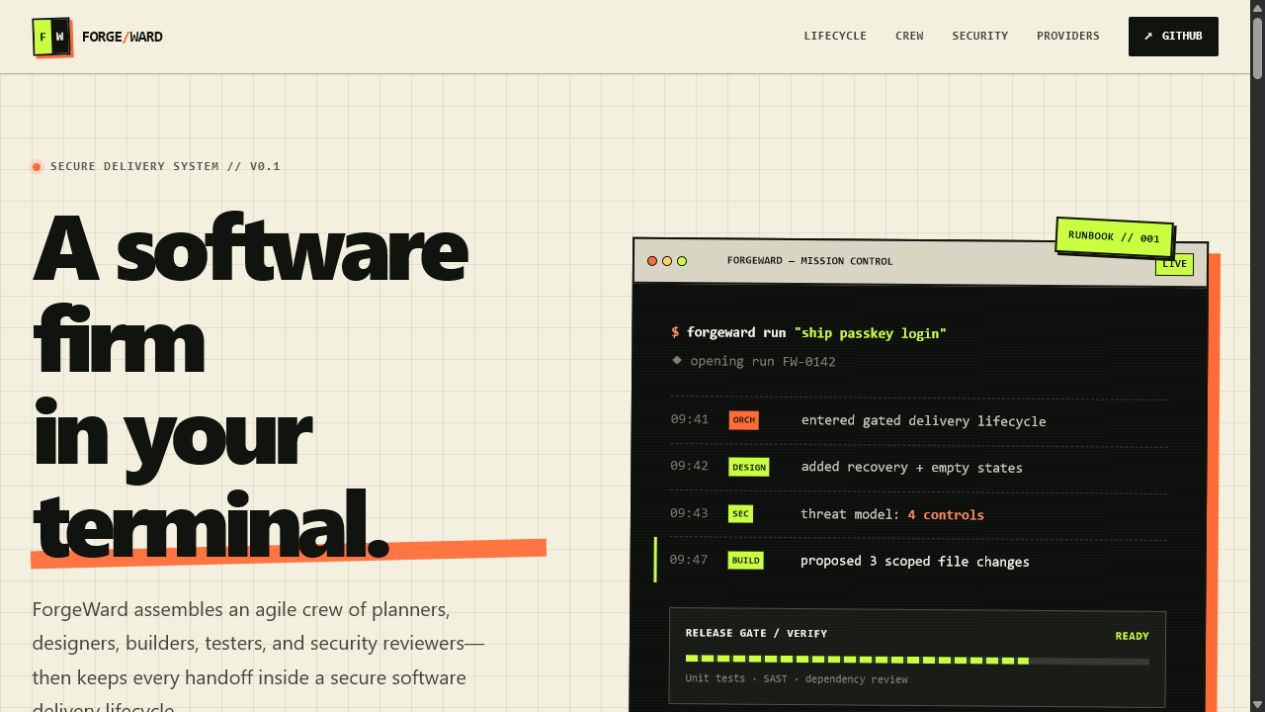
A model-agnostic, security-first software delivery harness that turns specialist model roles into a gated SDLC with human approvals and inspectable evidence.
Open projectThree public, verifier-first explorations of Conway-99, an Erdős covering problem, and the Krenn–Gu conjecture—publishing exact finite or conditional progress while keeping every global problem explicitly unresolved.
Open projectA deterministic neural-worm terrarium with contact-driven boarding, randomized Seed Forge worlds, causal control lanes, and checksummed replay—plus one unapologetically scripted aerial kickflip.
Open project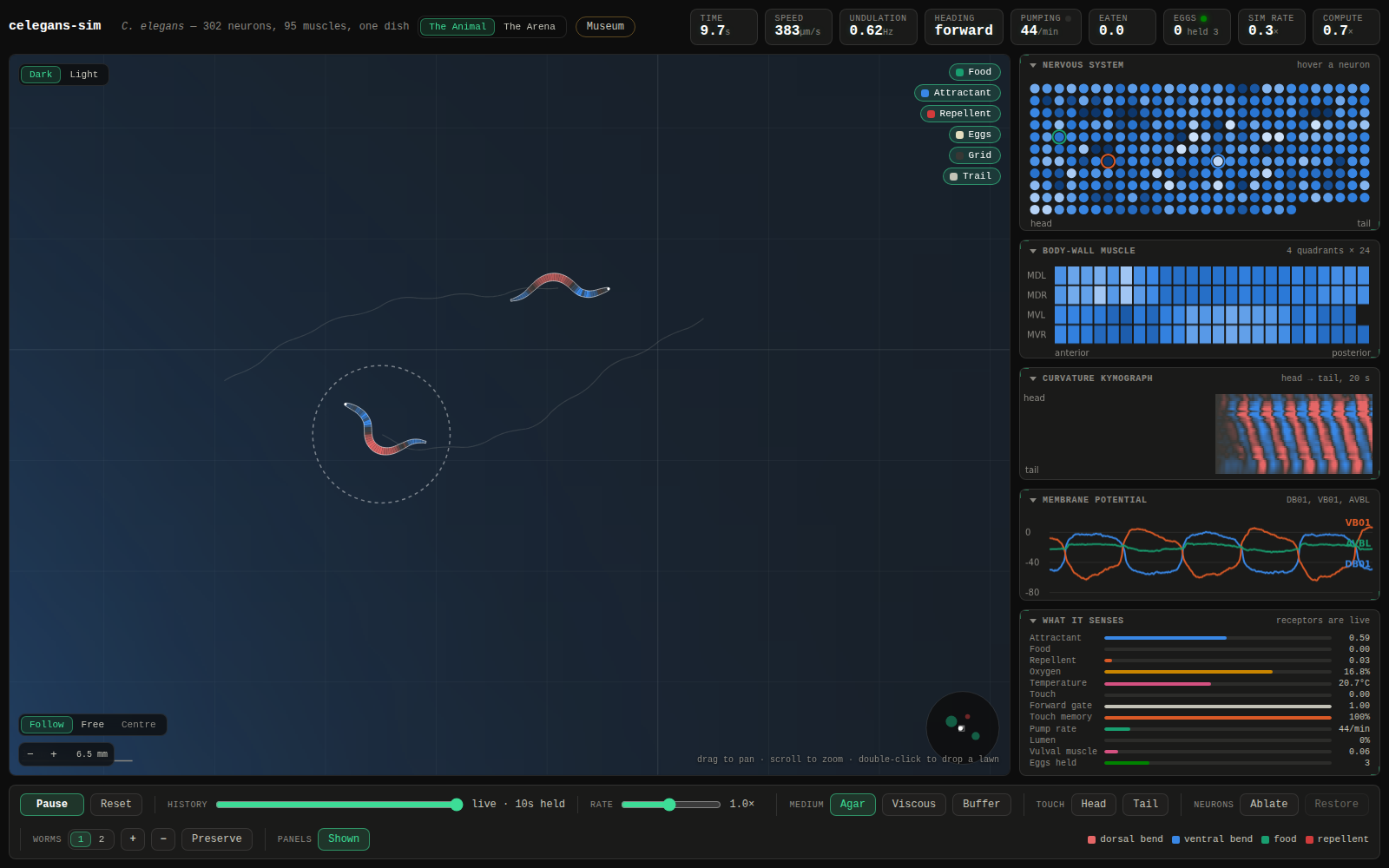
A public scientific-computing lab running 302 graded-potential neurons, 95 body-wall muscles, an inextensible low-Reynolds-number body, and a browser viewer as one closed loop.
Open projectA reproducible PufferLib training harness where one compact policy stabilizes and races 2,048 batched Crazyflie-style drones through randomized 3D rings, backed by a measured and hash-checked baseline.
Open projectA living 3D glasshouse aviary backed by a fail-safe weekly asset pipeline that quarantines, validates, optimizes, and provenance-tracks generated bird models before publication.
Open projectA private, production-shaped client value ledger that turns promised outcomes and source-backed proof into monthly briefs, client pulse signals, and transparent renewal readiness.
Open projectAn original Godot 4 vertical slice with an explorable magical hub and a complete, repeatable card duel built around readable enemy intent, mana, wards, status effects, and real win/loss states.
Open projectPrivate, local-first tooling for immutable market-data evidence, deterministic normalization, frozen offline experiments, and reports that keep plumbing checks separate from effectiveness claims.
Open project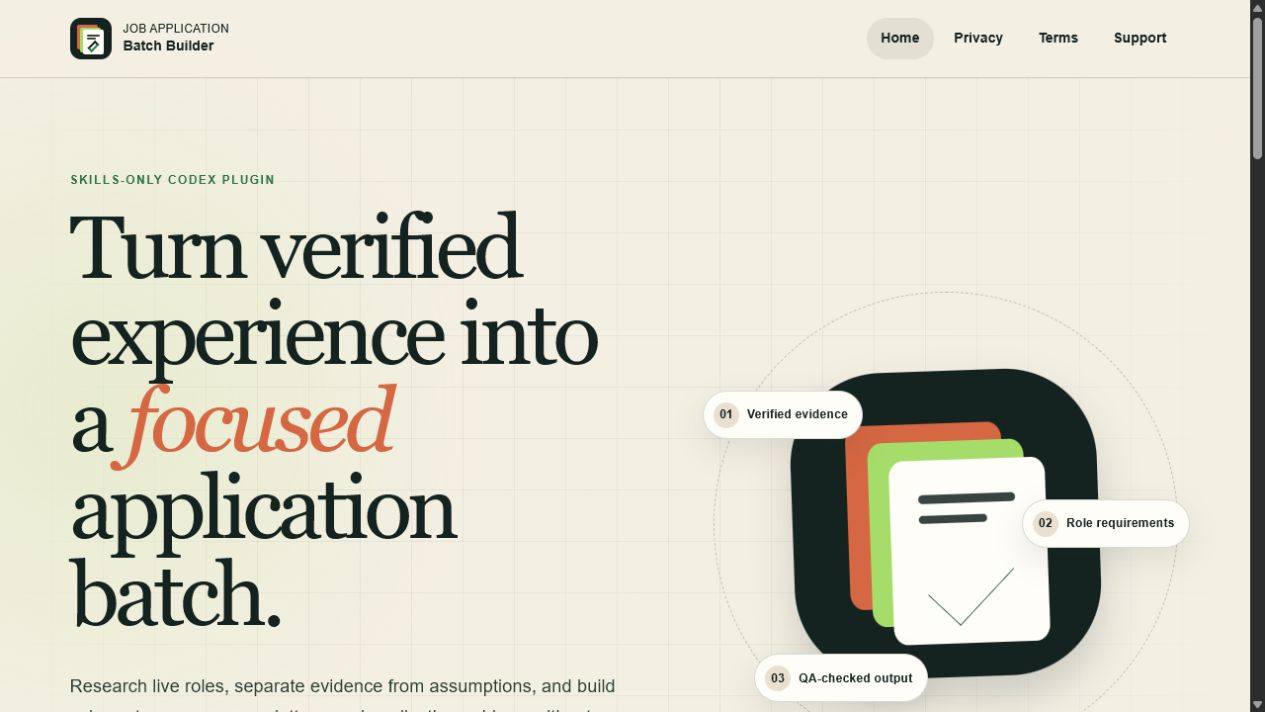
An evidence-first Codex plugin and reusable skill that researches current roles and builds truthful, role-specific application packages without quietly inventing a better candidate.
Open project
The deployment plumbing behind this site and its smaller siblings: signed webhooks, health-checked Docker rollouts, and Caddy routing on one VPS.
Open project
An interactive, repository-derived map of the Krenn–Gu proof programme that keeps scoped results, open branches, and failed routes visibly distinct while the global conjecture remains unresolved.
Open project
A small 3D aquarium for the browser, built with React and Three.js and deployed like a real app because apparently I cannot leave anything simple.
Open project
A tiny daily bird site powered by recent eBird observations, a small Express API, and an unreasonable amount of affection for birds.
Open project
A six-person capstone connecting a NestJS/PostgreSQL backend, an Expo mobile app, and a classroom reader service for verified check-ins.
Open projectTwo Expo/Firebase prototypes: one for vehicle access approvals and one for QR-based classroom attendance.
Open project2025
React Native Cloud Prototypes
Two Expo/Firebase prototypes: one for vehicle access approvals and one for QR-based classroom attendance.
My notes
These were my first serious passes at taking a mobile workflow all the way from a phone screen to cloud-backed state. Drive Safe handled photo-based vehicle approvals; the attendance prototype swapped that flow for teacher-generated QR codes and student check-ins.
They are proofs of concept, not production security systems, and their Firebase backends are intentionally switched off now. The useful part was learning the loop: permissions, routing, role-specific screens, uploads, live database updates, and all the small failure states that appear once an app leaves a single device.
These two React Native prototypes explored the same core mobile pattern in different domains: use a phone app as the user-facing surface, use Firebase for cloud-backed state, and make the workflow visible through live updates rather than static forms.
Drive Safe Doha was a vehicle approval proof of concept. A car-side flow captured a photo, uploaded it to Firebase Storage, and created a pending request in Firestore. An owner-side flow listened for new requests, reviewed the image, and approved or denied access.
QR Attendance Verification adapted the same Expo/Firebase foundation for an education workflow. A teacher generated a class QR code, students scanned it with their phone camera, and Firestore reflected live attendance state for the roster.
Neither project was intended as a production security system. They were useful because they made the mobile-to-cloud loop concrete: routing, camera permissions, image or QR handling, real-time database updates, and role-specific screens all had to work together.