Selected work / P♠
Projects
Tools, products, simulations, infrastructure, and evidence-gated research—with the honest limits left in.
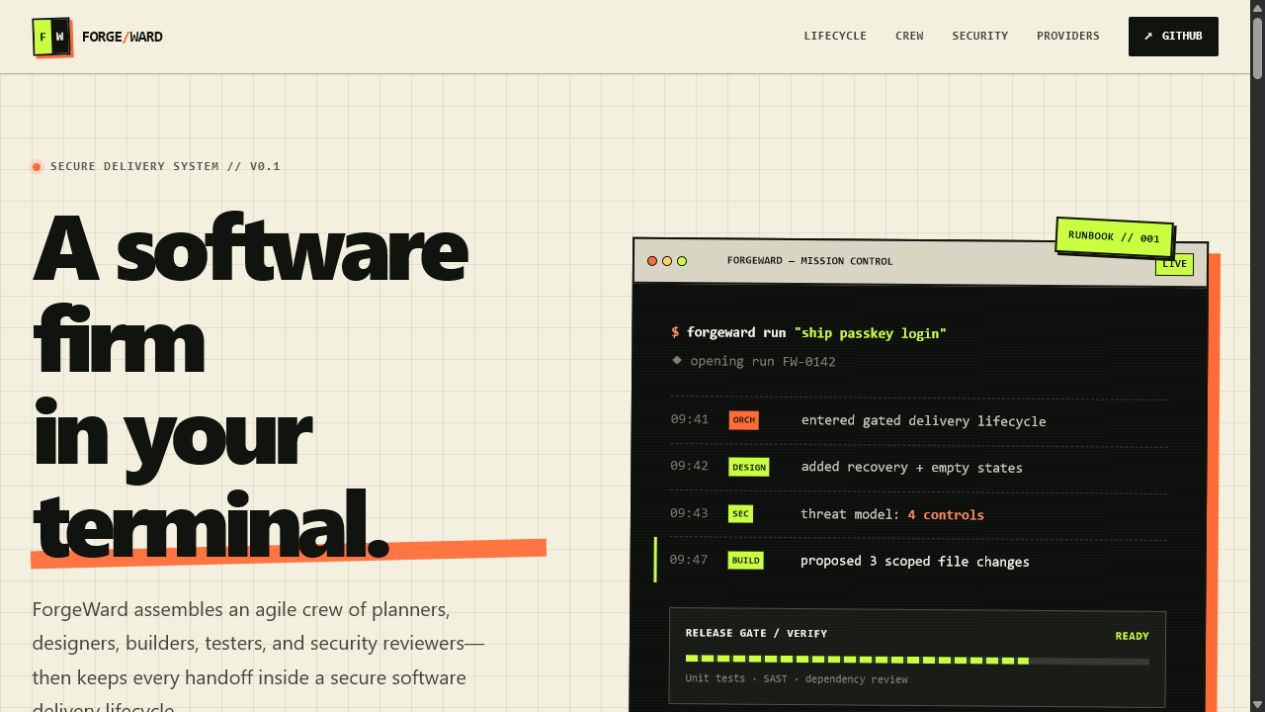
A model-agnostic, security-first software delivery harness that turns specialist model roles into a gated SDLC with human approvals and inspectable evidence.
Open projectThree public, verifier-first explorations of Conway-99, an Erdős covering problem, and the Krenn–Gu conjecture—publishing exact finite or conditional progress while keeping every global problem explicitly unresolved.
Open projectA deterministic neural-worm terrarium with contact-driven boarding, randomized Seed Forge worlds, causal control lanes, and checksummed replay—plus one unapologetically scripted aerial kickflip.
Open project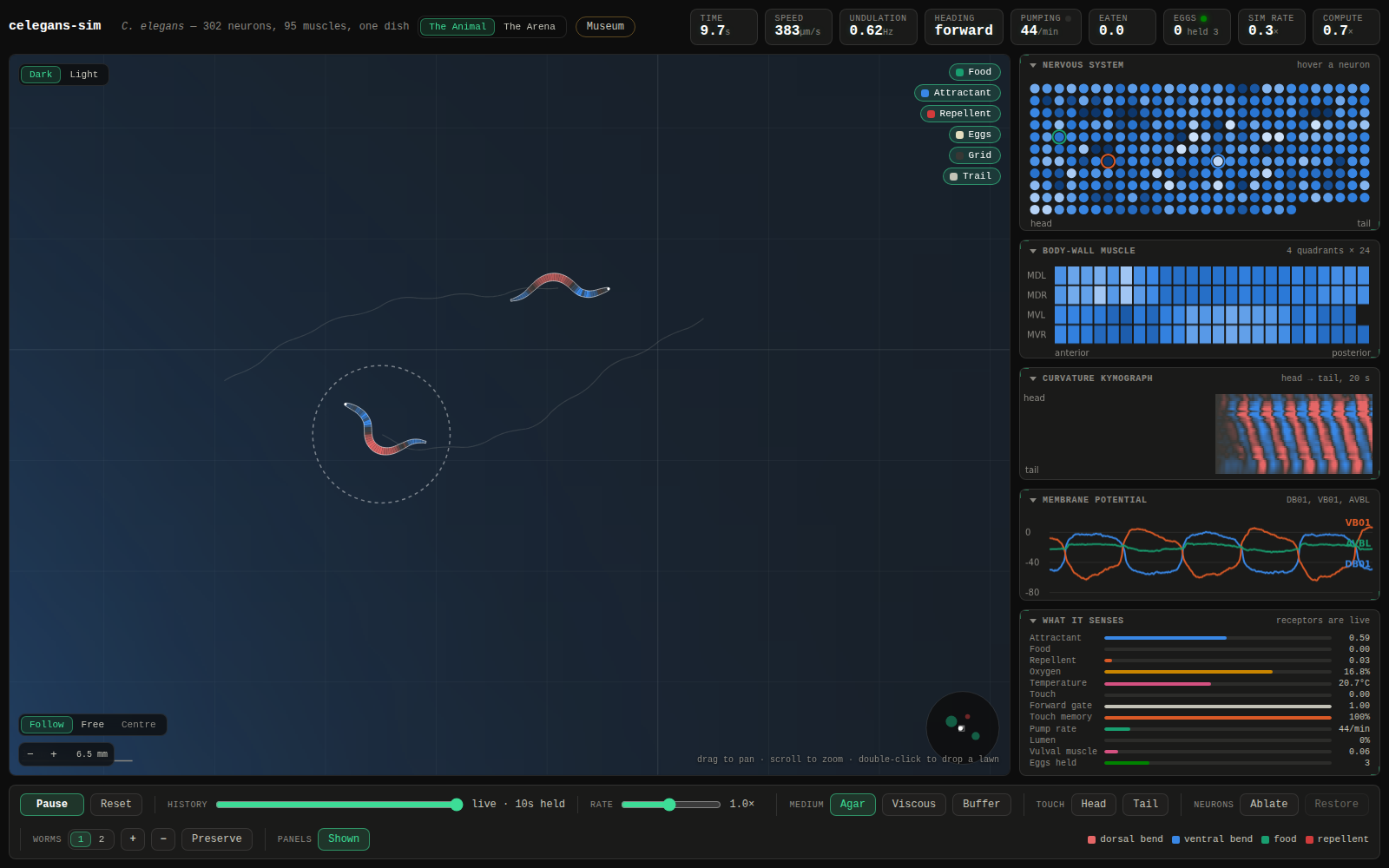
A public scientific-computing lab running 302 graded-potential neurons, 95 body-wall muscles, an inextensible low-Reynolds-number body, and a browser viewer as one closed loop.
Open projectA reproducible PufferLib training harness where one compact policy stabilizes and races 2,048 batched Crazyflie-style drones through randomized 3D rings, backed by a measured and hash-checked baseline.
Open projectA living 3D glasshouse aviary backed by a fail-safe weekly asset pipeline that quarantines, validates, optimizes, and provenance-tracks generated bird models before publication.
Open projectA private, production-shaped client value ledger that turns promised outcomes and source-backed proof into monthly briefs, client pulse signals, and transparent renewal readiness.
Open projectAn original Godot 4 vertical slice with an explorable magical hub and a complete, repeatable card duel built around readable enemy intent, mana, wards, status effects, and real win/loss states.
Open projectPrivate, local-first tooling for immutable market-data evidence, deterministic normalization, frozen offline experiments, and reports that keep plumbing checks separate from effectiveness claims.
Open projectAn evidence-first Codex plugin and reusable skill that researches current roles and builds truthful, role-specific application packages without quietly inventing a better candidate.
Open project
The deployment plumbing behind this site and its smaller siblings: signed webhooks, health-checked Docker rollouts, and Caddy routing on one VPS.
Open project
An interactive, repository-derived map of the Krenn–Gu proof programme that keeps scoped results, open branches, and failed routes visibly distinct while the global conjecture remains unresolved.
Open project
A small 3D aquarium for the browser, built with React and Three.js and deployed like a real app because apparently I cannot leave anything simple.
Open project
A tiny daily bird site powered by recent eBird observations, a small Express API, and an unreasonable amount of affection for birds.
Open project
A six-person capstone connecting a NestJS/PostgreSQL backend, an Expo mobile app, and a classroom reader service for verified check-ins.
Open project
Two Expo/Firebase prototypes: one for vehicle access approvals and one for QR-based classroom attendance.
Open project2026
Job Application Batch Builder
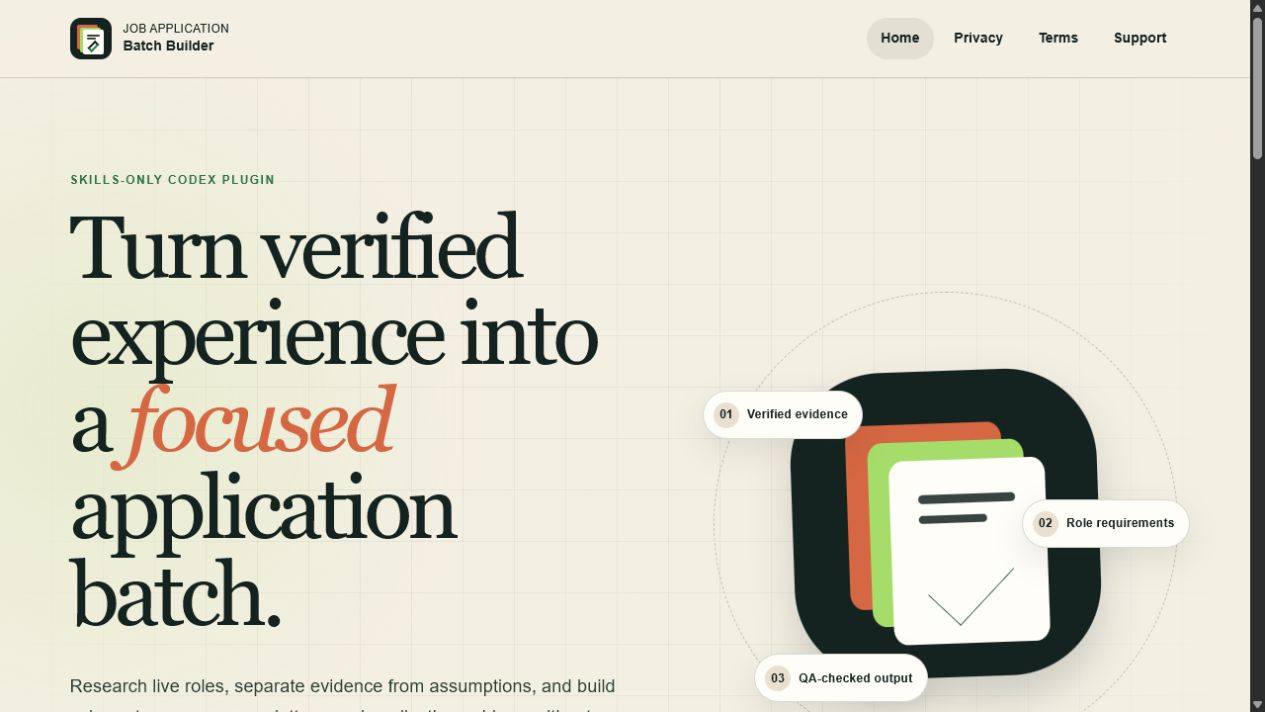
An evidence-first Codex plugin and reusable skill that researches current roles and builds truthful, role-specific application packages without quietly inventing a better candidate.
My notes
I built this in the middle of my own job search, after discovering that tailoring applications is repetitive but automating it carelessly is a spectacular way to produce polished nonsense.
The skill starts by separating evidence from assumptions. It can inspect candidate-authorized resumes, transcripts, repositories, GitHub profiles, constraints, and current job postings, then use that map to prepare role-specific materials. Claims still have to trace back to something real, related projects can be consolidated without becoming imaginary employment, and application submission stays outside the workflow unless somebody authorizes it separately.
I also took it through the less glamorous parts of publishing a real plugin: a public repository scrubbed of candidate data, reusable scripts and references, a small product site, brand assets, and plain-language privacy, terms, and support pages. Building a job-search tool while looking for a job is either good systems thinking or an extremely elaborate form of procrastination. I am choosing the first interpretation.
Job Application Batch Builder is a reusable Codex plugin and skill for producing evidence-based application batches from candidate-authorized sources.
The workflow builds a structured evidence map, researches and ranks current roles, and generates ATS-readable role-specific resumes, cover letters, application-answer guides, and supporting DOCX/PDF packages. It audits claims, privacy, file structure, and rendered document output before handoff. The skill explicitly avoids inventing employers, dates, metrics, qualifications, or skills, and it does not submit applications or contact employers without separate authorization.
The public repository contains the plugin manifest, reusable skill instructions, reference material, local privacy-audit utilities, and brand assets. It intentionally excludes resumes, transcripts, generated applications, contact details, credentials, and candidate-specific material. A live public site documents the product and provides its privacy policy, terms, and support routes.